



S1PR3
Sphingosine-1-phosphate receptor 3 (S1PR3) is a G protein-coupled receptor that regulates vascular tone and endothelial function[1]. Mechanistically, S1PR3 activation stimulates intracellular PI3K/Akt and ERK1/2 signaling, promoting extracellular matrix synthesis and vascular remodeling independent of Smad pathways[1]. In physiological models, S1PR3 contributes to blood pressure homeostasis and flow-mediated mechanotransduction, complementing S1PR1-mediated nitric oxide signaling[2][1]. Compared with S1PR1 and S1PR2, S1PR3 exhibits distinct pro-fibrotic potential and unique signaling bias, influencing fibroblast and endothelial responses differently[1][3]. In disease models, S1PR3 involvement has been implicated in pulmonary fibrosis and inflammatory vascular injury, where agonist-mediated activation enhances extracellular matrix deposition and endothelial remodeling[1]. Selective agonists and antagonists have been used to dissect S1PR3-specific effects, demonstrating that dual S1PR1/S1PR3 agonists amplify fibrotic signaling, whereas S1PR3-sparing modulators reduce off-target vascular responses[1][4]. For experimental applications, these pharmacological tools allow precise modulation of fibroblast differentiation, vascular remodeling, and inflammation, facilitating the development of targeted therapies without interfering with closely related isoforms[1][4][3]. Collectively, S1PR3 represents a functionally distinct S1P receptor with critical roles in cardiovascular physiology, fibrosis, and experimental modeling of vascular and pulmonary disease.
References:
- [1]. Cantalupo A, et al. S1PR1 (Sphingosine-1-Phosphate Receptor 1) Signaling Regulates Blood Flow and Pressure. Hypertension. 2017 Aug;70(2):426-434. [Content Brief]
- [2]. Sobel K, et al. Sphingosine 1-phosphate (S1P) receptor agonists mediate pro-fibrotic responses in normal human lung fibroblasts via S1P2 and S1P3 receptors and Smad-independent signaling. J Biol Chem. 2013 May 24;288(21):14839-51. [Content Brief]
- [3]. Wei X, et al. Discovery of Novel Selective Dual Agonists Targeting S1PR1 and S1PR5 for the Treatment of Inflammatory Bowel Disease. J Med Chem. 2026 Mar 12;69(5):5575-5593. [Content Brief]
- [4]. Adams JW, et al. Functional activity of etrasimod (APD334), a novel sphingosine-1-phosphate receptor modulator, at S1P4 receptors. FASEB J. 2017;31(1 Suppl):993.12.
-
S1PR3 관련 제품 (9)
관련 제품 (9)

-
Siponimod
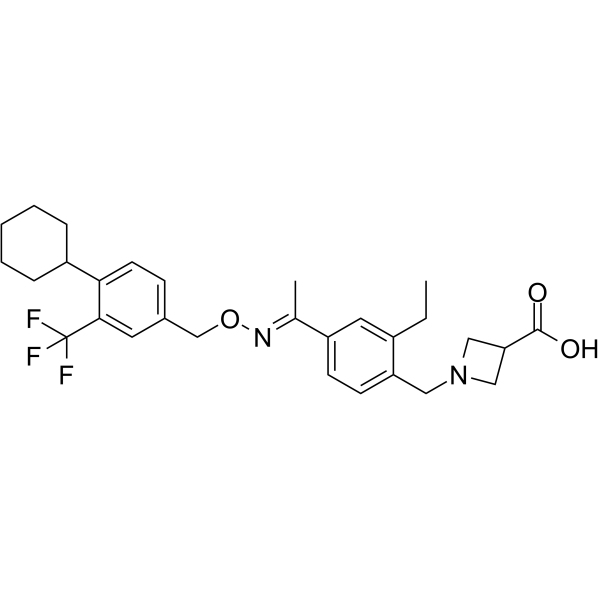 0 ImagesSynonyms: BAF-312Siponimod (BAF-312) is an orally active, blood-brain barrier penetrant dual agonist of S1P1/S1P5, with EC50 values of 0.39 nM and 0.98 nM, respectively. Siponimod induces S1P1 internalization, activates GIRK channels, inhibits lymphocyte egress, reduces peripheral lymphocyte counts, triggers transient bradycardia, prevents synaptic neurodegeneration, promotes remyelination, alleviates demyelination, and prevents the loss of GABAergic interneurons. Siponimod can be used in research related to multiple sclerosis.
-
Ponesimod
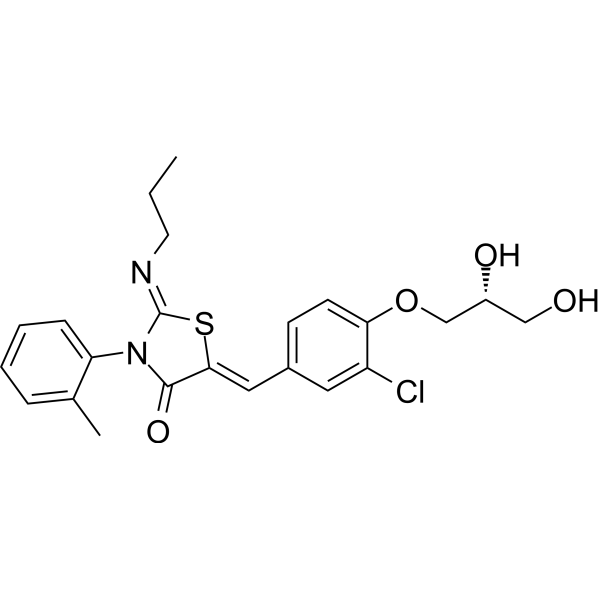 0 ImagesSynonyms: ACT-128800Ponesimod (ACT-128800) is a potent, selective and orally active agonist of S1P1, with an IC50 of 6 nM in a radioligand binding assay. Ponesimod activates S1P1-mediated signal transduction with high potency (EC50=5.7 nM). Ponesimod can protect against lymphocyte-mediated tissue inflammation.
-
CYM-5478
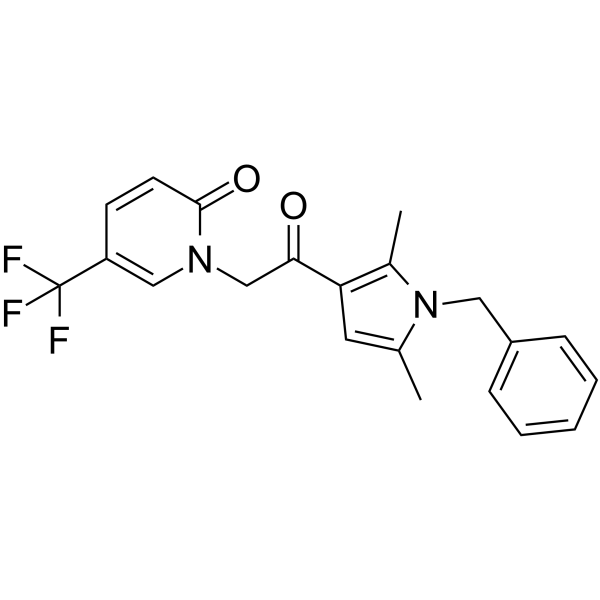 0 ImagesCYM-5478 is a potent and highly selective S1P2 agonist with an EC50 of 119 nM in a TGFα-shedding assay. CYM-5478 protects neural-derived cell lines against Cisplatin toxicity.
-
S1PR5-IN-1
 0 ImagesS1PR5-IN-1 (Compound 7a) is a highly selective S1PR5 antagonist and orally bioavailable inhibitor with a human S1PR5 IC50 of 85.4 nM and human S1PR5 Kd of 2.173 nM.S1PR5-IN-1 binds to S1PR5 and inhibits natural killer cell migration toward sphingosine-1-phosphate.S1PR5-IN-1 can be used for the research of multiple sclerosis.
-
Siponimod hemifumarate
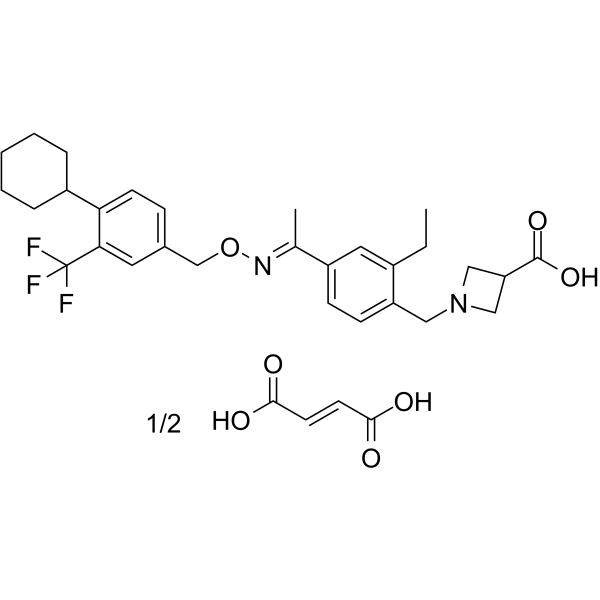 0 ImagesSynonyms: BAF-312 hemifumarateSiponimod (BAF-312) hemifumarate is an orally active, blood-brain barrier penetrant dual agonist of S1P1/S1P5, with EC50 values of 0.39 nM and 0.98 nM, respectively. Siponimod hemifumarate induces S1P1 internalization, activates GIRK channels, inhibits lymphocyte egress, reduces peripheral lymphocyte counts, triggers transient bradycardia, prevents synaptic neurodegeneration, promotes remyelination, alleviates demyelination, and prevents the loss of GABAergic interneurons. Siponimod hemifumarate can be used in research related to multiple sclerosis.
-
L-threo Lysosphingomyelin (d18:1)
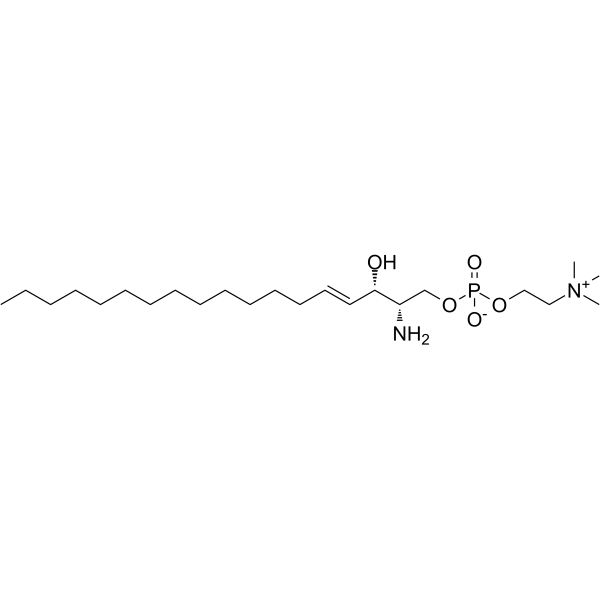 0 ImagesSynonyms: L-threo-SphingosylphosphorylcholineL-threo Lysosphingomyelin (d18:1) (L-threo-Sphingosylphosphorylcholine) is an endogenous bioactive sphingolipid. L-threo Lysosphingomyelin (d18:1) is a potent S1P receptor agonist with EC50s of 19.3, 131.8, and 313.3 nM for hS1P1, hS1P3, and hS1P2, respectively.
-
AMG 369
 0 ImagesCat. No.: HY-14402CAS No.: 1202073-26-4AMG 369 is an orally active and potent dual S1P1/S1P5 agonist with limited activity at S1P3 and no activity at S1P2/S1P4. AMG 369 reduces blood lymphocyte counts. AMG 369 delays onset and reduces severity of experimental autoimmune encephalomyelitis in rat.
-
TC-SP 14
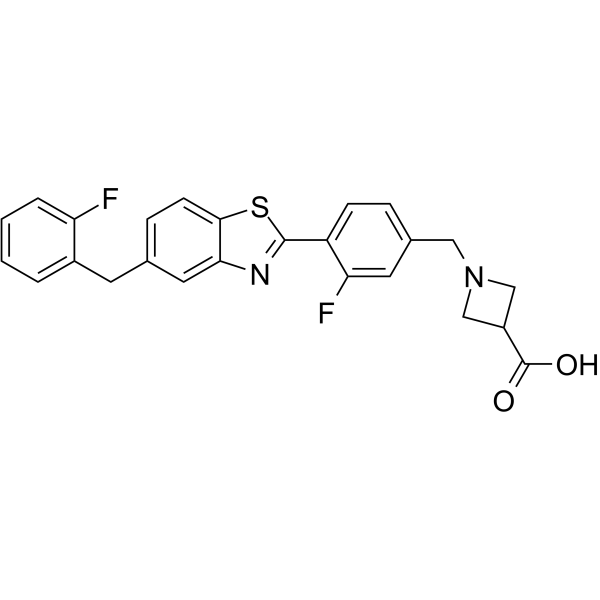 0 ImagesCat. No.: HY-108492CAS No.: 1257093-40-5TC-SP 14 (compound 14) is an orally active and potent S1P1 agonist (EC50 = 0.042 μM) with minimal activity at S1P3 (EC50 = 3.47 μM). TC-SP 14 significantly reduces blood lymphocyte counts and attenuates a delayed type hypersensitivity (DTH) response to antigen challenge.



